Connecting legal and business teams
Ask for a contract.
Get a contract.
Legal turns its templates into automated questionnaires. Business users just forward an email chain or answer a few questions, and Blanks fills in the document.
For business
The business asks.
Blanks delivers the contract.
Ask, wherever you already work
Forward an email chain, send a Slack message, share a Teams thread.
Fill in the blanks
Blanks checks the given data against a template legal built, asking only for missing details.
Ready document
You get back a compliant, signature ready contract.
Business gets speed. Legal keeps control.
For legal
Give Blanks a template.
It builds the questionnaire.
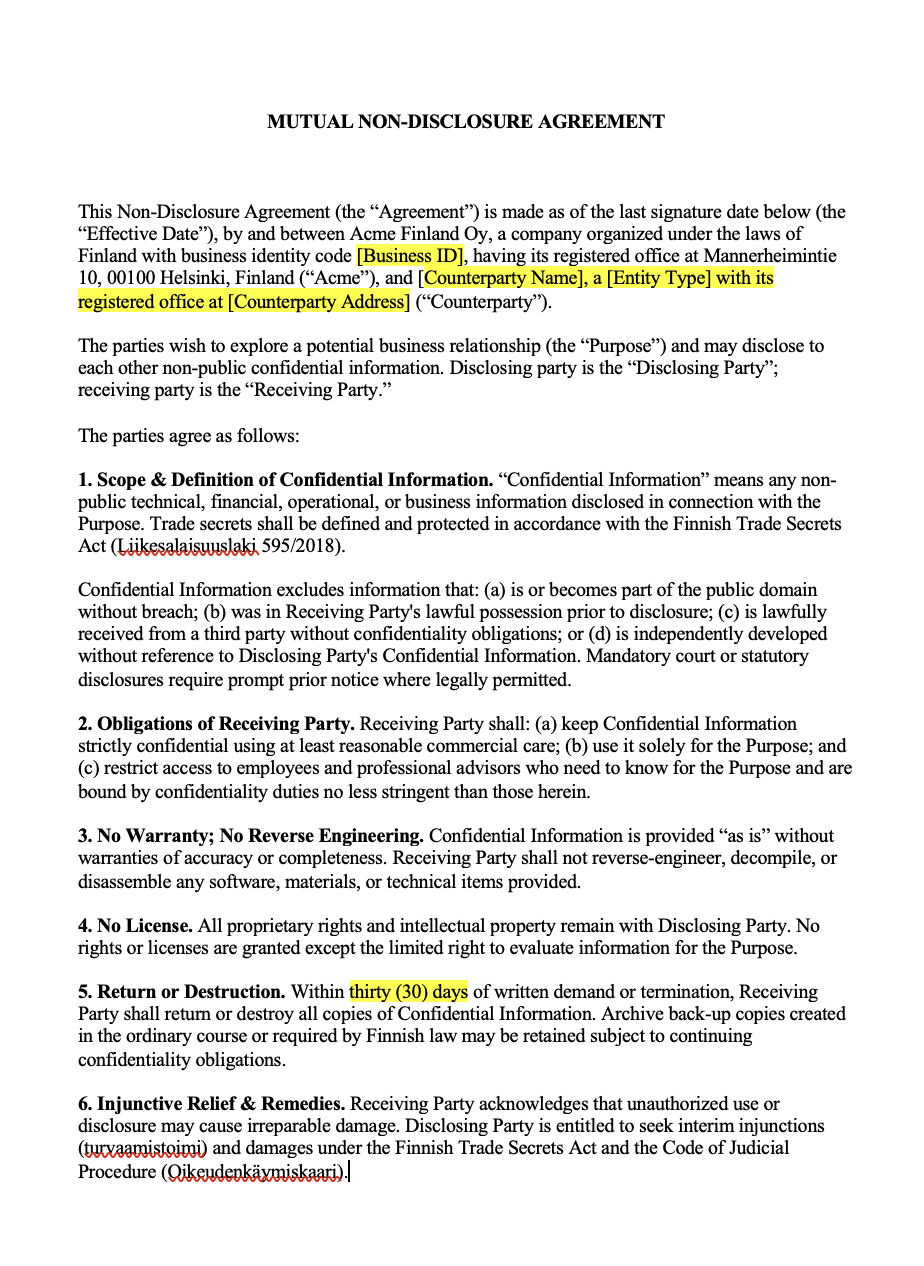
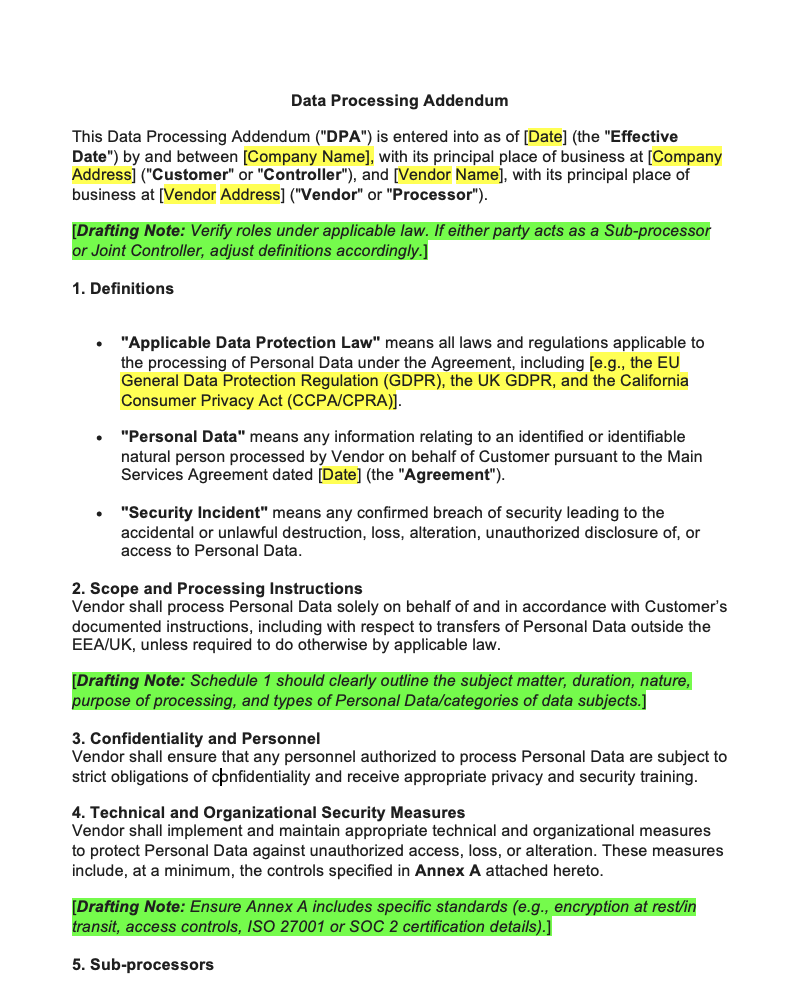
Point Blanks at the contracts you want to automate, along with any drafting notes, comments or square brackets marking optional clauses. If all you have are two clean versions of the same contract, upload both, and Blanks works out where they differ.
Blanks reads the templates and maps its clauses to legal concepts: parties, term, liability, governing law. It works out which choices drive which language.
Blanks proposes automation structure and creates a questionnaire for the business: what to ask, and which clause each answer produces. Nothing is generated freehand. Every question ties back to a clause you already wrote.
Add, remove or amend automations by chatting in natural language. Say something like, “Make this clause optional” or “Propose wording for mutual indemnity”. Review what Blanks drafts and save the automation for the business to use.
Blanks watches how the automation gets used and flags patterns worth a second look. It never changes a template on its own. Reviewing a suggestion, or stepping in for an escalation, takes minutes.
Who is the counterparty?
How long should the agreement last?
Should confidentiality survive termination?
Which jurisdiction governs the agreement?
Blanks flags a pattern
12 users escalated the same question. Do you think you should rephrase it?
Your users land outside your liability cap 70% of the time. Is this something you'd want to take a look at?
3 users requested a mutual indemnity clause this template doesn't have. Want to add it?
Ready to fill in the Blanks?
We can show how you can automate your documents in minutes. Book a walkthrough with the founders.